Why AI Data Centers Need a New Kind of Battery
AI isn’t just hungry for data—it’s hungry for power.
High-density GPU clusters and training workloads can slam your power infrastructure with sudden surges that traditional data center designs were never built to handle.
That pressure is showing up in three key areas:
- Fast, spiky load patterns from GPU farms
- Higher peak demand that stretches UPS and backup systems
- Growing scrutiny on safety and sustainability in energy storage
ZincFive is trying to tackle all three with a fresh approach: swapping the usual lithium-ion batteries for nickel-zinc (NiZn) chemistry in a system built specifically for AI workloads.
Their flagship solution for this space is the BC 2 NiZn AI battery cabinet, built to sit behind your UPS and absorb the chaos that AI compute brings.
From Backup Only to Active Power Partner
Most data center battery systems live a pretty boring life. They sit idle, waiting for an outage, and hopefully do their job when the lights flicker.
The BC 2 AI cabinet is designed to be more than a passive backup:
- Dual-mode operation
- Acts as a traditional battery backup during outages
- Provides active energy management when the grid is stable
In normal conditions, the system helps smooth out dynamic power behavior at the UPS level, rather than just quietly waiting in the background. That means:
- Less stress on upstream power infrastructure
- More predictable load for the utility
- An opportunity to reduce CAPEX and avoid overbuilding gear just to handle rare power spikes
Built for GPU Spikes and AI Training Loads
GPU-heavy AI environments are notorious for sharp transient loads—brief but intense bursts of power demand. Traditional battery systems and legacy UPS designs can struggle here.
ZincFive’s BC 2 AI platform is tuned for these scenarios:
- Ultra-fast transient response to sudden load changes
- High power density, so it can handle big surges without sprawling across your entire power room
- Ability to absorb sharp load spikes coming from GPU clusters and training environments
At the same time, it still provides the runtime you need to protect:
- Conventional IT servers
- Storage systems
- Network infrastructure
So your AI environment gets the responsiveness it needs without sacrificing traditional backup expectations.
Why Nickel-Zinc Instead of Lithium-Ion?
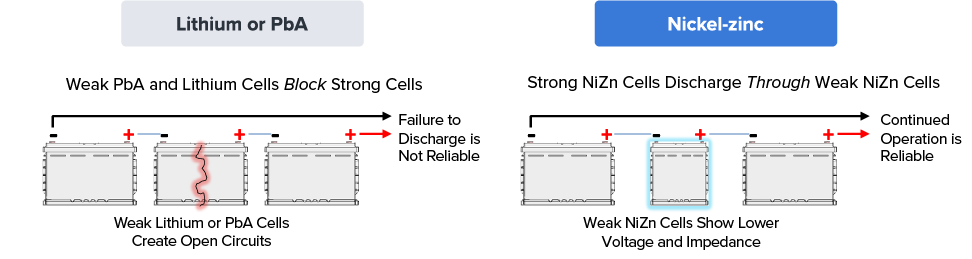
Lithium-ion has become the default in many energy storage conversations, but it’s not the only chemistry in town. ZincFive leans hard into nickel-zinc as its differentiator, emphasizing:
- Safety advantages
- NiZn is non-thermal runaway–prone compared to certain lithium chemistries
- Reduced risk of fire events is a big deal in tightly packed data centers
- Sustainability
- Nickel-zinc compositions can be easier to recycle and handle at end-of-life compared to some lithium-based systems
- Lower environmental concerns align with corporate ESG and sustainability goals
- Performance profile
- NiZn is inherently good at delivering high power in short bursts, which lines up well with AI’s transient load behavior
- Pair that with high power density, and you get a compact but extremely capable battery system
For operators who are wary of lithium-ion from a risk or compliance standpoint, NiZn provides an alternative that still hits performance targets.
Reducing Upstream Stress and Improving Grid Interaction
One of the more subtle but important roles of a system like BC 2 AI is protecting everything upstream from the UPS:
- Instead of allowing every GPU surge to propagate into switchgear, transformers, and utility feeds,
- the battery system buffers and shapes the load at the UPS layer.
That can translate to:
- Lower strain on upstream electrical equipment
- Potential reduction in overprovisioning and contingency build-outs
- Better grid-facing behavior, which is increasingly important as utilities push back on erratic or oversized loads from AI campuses
In other words, you’re not just adding backup—you’re adding a layer of intelligence and elasticity between your compute and your power infrastructure.
Smaller Footprint, Bigger Impact
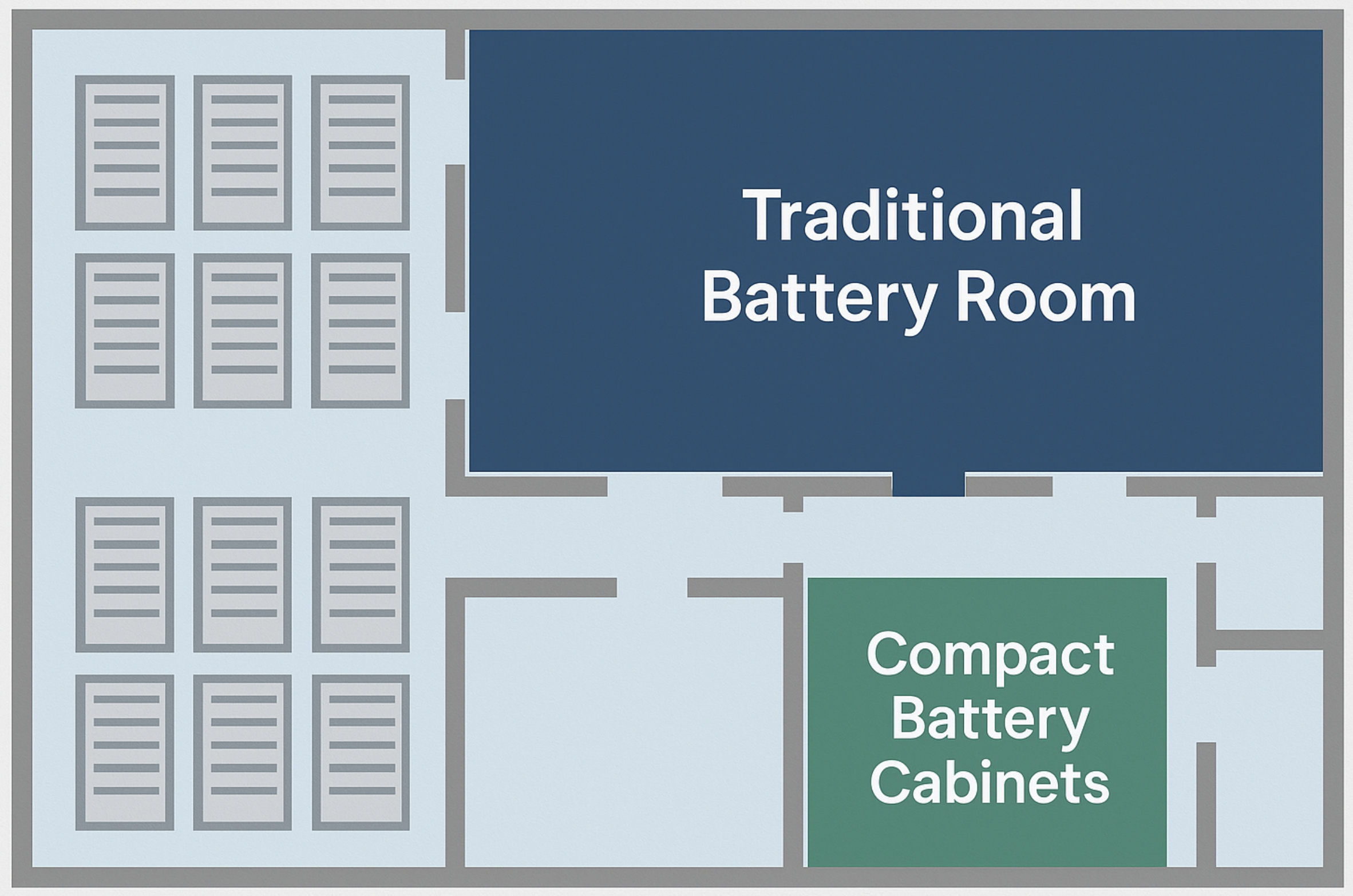
AI-ready power solutions often demand a lot of real estate. To support short but intense surges, some competing systems may require two to four times more floor space to match the load profile that a modern AI environment can generate—sometimes reaching up to 150% of the UPS’s rated capacity during spikes.
ZincFive’s pitch is that the BC 2 AI cabinet delivers:
- Minimal footprint expansion
- Enough headroom to handle those AI power surges without sprawling into adjacent white space
- A more efficient use of power rooms or electrical galleries where every rack position matters
For operators fighting to balance compute density with infrastructure space, shrinking the power system footprint can be just as valuable as shrinking server footprints.
Positioning for the AI Era
AI is forcing data centers to rethink what “mission-critical power” really means. It’s no longer just about surviving an outage; it’s about:
- Staying stable under volatile GPU-driven loads
- Keeping power infrastructure lean and efficient
- Meeting higher bar expectations for safety and sustainability
ZincFive’s BC 2 NiZn AI battery cabinet is one example of where the industry is heading:
batteries that act as active participants in power management, not just last-resort backups, and chemistries that match the performance and risk profile of AI-scale environments.
For operators planning new AI halls—or retrofitting legacy facilities to handle high-density GPU clusters—solutions like NiZn-based battery cabinets are going to be part of the conversation around what a future-ready AI data center looks like.